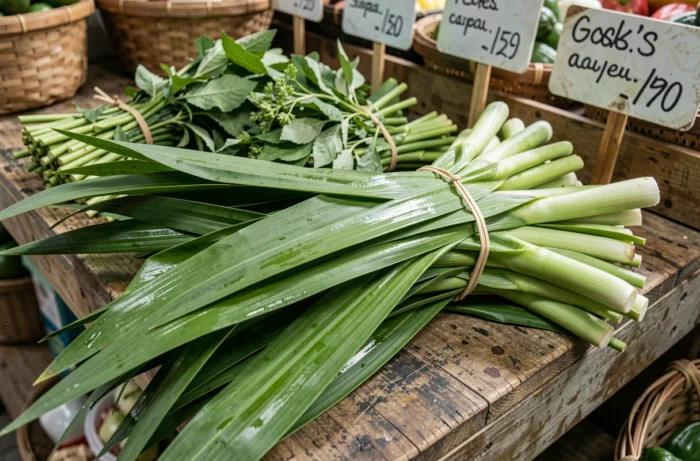
Finding pandan leaves in France involves choosing between several forms of the product (fresh, frozen, powdered) and various purchasing channels, each with its constraints on price, availability, and preservation. The gap between these options is more pronounced than one might think, and it directly affects the outcome in cooking.
Comparison of pandan forms available in France
Before looking for a store, the first question to settle is which form of pandan is suitable for your use. Each format has a distinct profile in terms of aroma, practicality, and shelf life.
| Form | Aromatic Intensity | Preservation | Availability in France | Main Use |
|---|---|---|---|---|
| Fresh leaves | Maximum | Several days in the refrigerator | Rare, irregular arrivals | Infusion, flavored rice, traditional desserts |
| Frozen leaves | Good (slightly reduced) | Several months in the freezer | Average, urban Asian grocery stores | Infusion, cakes, beverages |
| Pandan powder | Variable by brand | Several months at room temperature | Wide (online and in-store) | Baking, natural coloring |
| Liquid extract | Low (often artificial) | Long | Wide | Coloring, flavoring |
The fresh leaf remains the reference for the intensity of aroma and the natural color it releases. However, the powder is the most accessible form in France, available in packets from several specialized brands and on online platforms.
The liquid extract, often sold in small bottles in Asian grocery stores, frequently contains artificial colorants. Checking the ingredient list helps avoid a product that does not provide the taste or natural color of pandan.
Asian grocery stores and specialized channels for fresh pandan
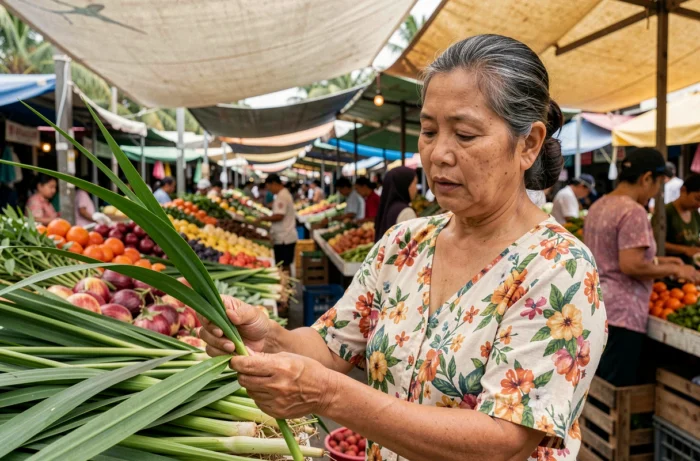
Asian grocery stores in major French cities (Paris, Lyon, Marseille, Bordeaux) are the main channel for fresh or frozen leaves. Stores located in neighborhoods with a strong Southeast Asian community receive shipments of fresh products, but the availability of fresh pandan leaves entirely depends on the import schedule.
In practical terms, you need to ask the merchant when the next shipment is expected. Some agree to reserve a batch on order. The frozen options, which are more reliable, can be found in the refrigerated sections of these same stores.
For those looking for where to find pandan leaves without a specialized grocery store nearby, online Asian food sales sites ship frozen leaves in insulated packaging. The powder can be easily purchased on general platforms like Amazon or from French brands dedicated to pandan.
- In physical stores: prioritize grocery stores that import directly from Vietnam or Thailand, as they replenish their stocks of fresh products more regularly than general retailers.
- Online (frozen): ensure that the seller uses insulated packaging with a cooling pack for transport; otherwise, the leaves may arrive thawed and lose their aroma.
- Online (powder or extract): compare the price per gram between packets, as the differences can be significant from one brand to another. Reading customer reviews helps identify powders with authentic taste.
Phytosanitary regulations and import of fresh leaves
Bringing back pandan leaves in your luggage after a trip to Southeast Asia is a common idea, but it faces a specific regulatory constraint. Since December 14, 2019, all plants and parts of plants entering the EU from a third country must be accompanied by a phytosanitary certificate.
Only a few tropical fruits benefit from an exemption (pineapples, coconuts, dates, bananas, durians). Pandan leaves are not included. Without this certificate, customs may seize the product upon arrival.
New European phytosanitary requirements, announced for October 2026, could further tighten controls on imported plants. The NVWA (Dutch Food Safety Authority) confirmed at the end of August 2026 additional requirements for several imported products. Personal import of fresh leaves without a certificate should therefore be avoided, even in small quantities.
Pandan powder: selection criteria and pitfalls to avoid
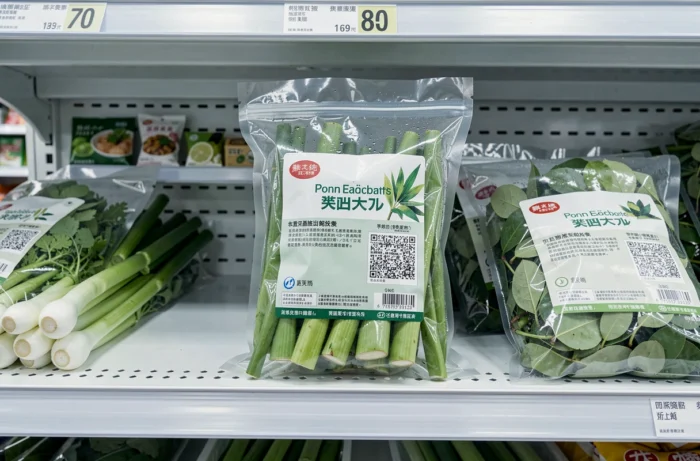
Pandan powder has become the most practical format for cooks in France. Its shelf life and ease of use make it a common product in desserts, cakes, and beverages.
Not all packets are created equal. Some powders are mixed with colorants or artificial flavors to compensate for a low dosage of actual leaf. A good reflex: check that the ingredient list mentions only pandan leaf, without additives or added sugar.
- Natural color: a 100% pandan powder displays a matte green, not a fluorescent green. An overly bright green almost always indicates added coloring.
- Origin: powders made from leaves grown in Southeast Asia (Thailand, Vietnam, Indonesia) generally retain a more pronounced aromatic profile than those with unspecified origins.
- Packaging: a resealable bag or airtight container better protects the aroma than an open packet. The powder loses its fragrance with prolonged exposure to air.
In terms of price, the differences between brands are notable for an apparently similar product. Comparing the price per gram, rather than the price of the packet, remains the most reliable method to evaluate an offer.
Ultimately, the choice of purchasing channel depends on the desired form. For fresh leaves, the local Asian grocery store remains the essential stop, with the uncertainty of arrivals. For powder or frozen options, online platforms provide regular access and easy comparison of customer reviews. European phytosanitary regulations make personal import risky, which reinforces the interest in established distribution channels within French territory.