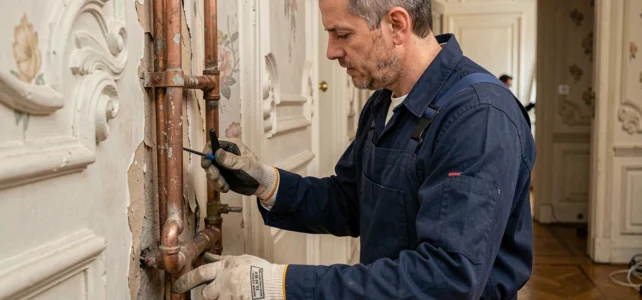
In Brussels, several thousand buildings benefit from a heritage protection status, whether it be a classification, an inscription on a preservation list, or inclusion in a protection zone. Modifying the plumbing in one of these apartments is not just a simple technical project: the regulatory framework imposes additional steps that extend timelines and complicate every decision, from the layout of pipes to the choice of materials.
Heritage Status in Brussels: What Changes for Plumbing
In a non-protected building, an interior plumbing renovation (replacement of pipes, relocation of a water point, refurbishment of a bathroom) generally falls into the category of minor works. No urban planning permit or architect is required, provided that the structure or the building’s envelope is not affected.
For an apartment located in a classified building or listed for preservation, the situation differs radically. Any intervention exceeding routine maintenance, even a technical replacement “in kind,” is in principle subject to a permit and the opinion of the Cultural Heritage Directorate.
Carrying out plumbing work in a classified apartment therefore requires anticipating this procedure well before the start of the project. The distinction between “routine maintenance” and “technical modification” is not always clear: replacing a faucet poses no difficulty, but relocating a drainage column or drilling a load-bearing wall for a new layout falls into the realm of permits.
There are also intermediate heritage statuses. A building may not be classified in the strict sense but may be located within a protection perimeter or listed in the architectural heritage inventory. In these cases, the constraints are similar to those of a classified property, even if the owners are not always aware of this when starting their work.
Permits and Heritage Opinions: The Procedure That Extends the Project
The permit application for a protected property goes through the municipality but requires the favorable opinion of the Cultural Heritage Directorate of the Brussels Region. This dual administrative circuit extends timelines by several months compared to a standard file.
What the File Must Contain
The applicant must provide a detailed description of the planned interventions: layout of new pipes, materials used, impact on heritage elements (moldings, period floors, original partitions). A photographic survey of the existing condition is generally required.
- Plans of the proposed installation, indicating any penetrations and pathways for ducts in the original walls or floors
- Justification note explaining why the chosen layout is the least intrusive for the historical building
- Commitment on fixing methods (no deep chases in classified masonry, for example)
- If applicable, opinion from a heritage specialist architect if required by the municipality
Field feedback varies on the actual timelines for obtaining permits. Some simple files are approved in a few weeks, while others can take several months when the Cultural Heritage Directorate requests modifications to the initial project.
Technical Constraints on Pipes and Layouts
A classified apartment often presents structural particularities that complicate the installation of new pipes. Original wooden floors, walls made of old brick masonry, molded interior cornices: each protected element limits the possibilities for drilling.
Adapting the Layout to the Existing Structure
The usual logic of a plumbing renovation is to choose the shortest and most direct route between the water supply point and the sanitary fixtures. In a classified property, the shortest route is not always the authorized route. It is necessary to navigate around heritage elements, which lengthens the pipes and may require additional fittings.
Visible piping remains a common option. Properly secured and dressed visible pipes avoid the need to drill into protected walls. This solution requires careful aesthetic work to remain compatible with the character of the place.
Materials and Fixings
Fixing techniques should be reversible whenever possible. Heavy anchoring in period masonry weakens the support and may be rejected by the heritage administration. Independent support clamps or discreet cable trays are accepted alternatives.
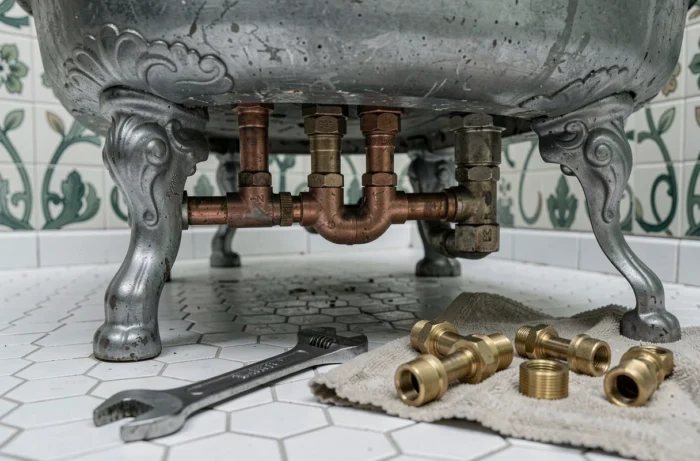
The choice of piping material (copper, multilayer, PEX) depends as much on technical constraints as on compatibility with the historical environment. Copper is often favored in classified properties for its durability and appearance, even though its cost is higher than plastic alternatives.
Cost Distribution and Responsibilities in Classified Co-ownership
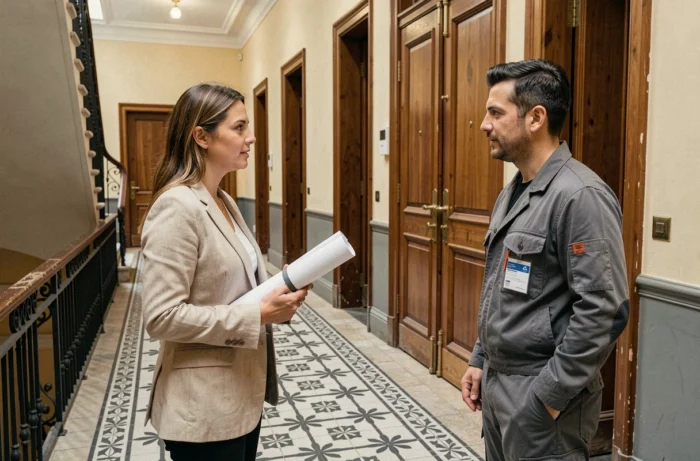
The majority of classified apartments in Brussels are located in co-owned buildings. The question of financial responsibility for plumbing work arises at two levels: private and common areas.
The rising columns and main drainage pipes fall under common areas. Their replacement or modification must be voted on in a general assembly. In a classified building, the agreement of the property manager is not sufficient if a heritage permit is required. The co-ownership must submit the application and collectively bear the costs of preparing the file.
For private works (replacement of fixtures, modification of a circuit in the bathroom), the co-owner bears the costs. However, if these private works require a permit due to the classification, the administrative fees are added to the project budget.
The available data does not allow for precise quantification of the average additional cost related to heritage status. It varies according to the complexity of the file, the requirements of the Cultural Heritage Directorate, and the level of conservation of the building. This additional cost is more related to preliminary studies and timelines than to the materials themselves.
One point remains crucial for owners considering this type of project: consult the municipality and the heritage service before ordering any materials. Incurring expenses on a project that will then be rejected or modified by the administration represents the most concrete financial risk. The administrative preparation phase, often perceived as a hindrance, actually protects against much more costly project restarts.