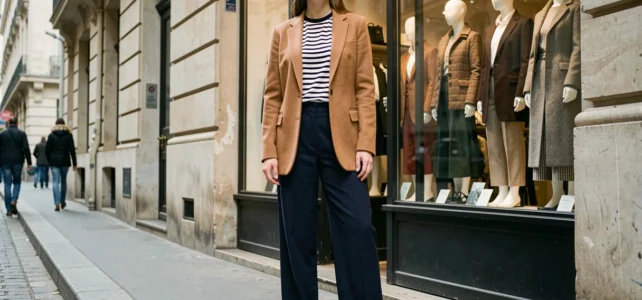
The fashion market is going through a period where two currents coexist without canceling each other out: quiet luxury, based on the discretion of materials and cuts, and an expressive maximalism that focuses on color, prints, and layering. Trend forecaster Christine Boland describes quiet luxury as an underlying movement destined to last, while noting that both aesthetics have fluidly coexisted on the Parisian runways for the fall-winter 26/27 season.
Adopting a unique style with fashion clothing is no longer about choosing a side, but rather understanding how these registers can respond to each other within the same wardrobe.
Quiet luxury and maximalism: two languages for the same wardrobe
Classic style guides often oppose minimalism and exuberance as two incompatible philosophies. Recent runways tell a different story: a simple dress in virgin wool can coexist with graphic print trousers in the same closet, as long as the person wearing them knows why they choose one or the other depending on the context.
Quiet luxury relies on clean cuts, neutral colors, and materials whose quality is perceived through touch rather than logos. Maximalism, on the other hand, plays with gilding, saturated colors, ample volumes, and graphic contrasts. Each of these directions reflects a different facet of personality.
The useful question is therefore not “which side to choose,” but rather: which pieces from each register correspond to your daily life. An unstructured blazer worn over a boldly patterned t-shirt creates a hybrid look that works both at the office and in the city. Exploring Bla Bla Bla’s fashion clothing allows you to spot pieces that play on this interplay between sobriety and character.
Building a personal clothing style without strictly following trends
The abundance of clothing available online does not simplify the search for a personal style; it complicates it. Consumers are increasingly expressing the need for concrete style advice rather than an ever-expanding product selection.
Starting from concrete constraints rather than abstract inspirations
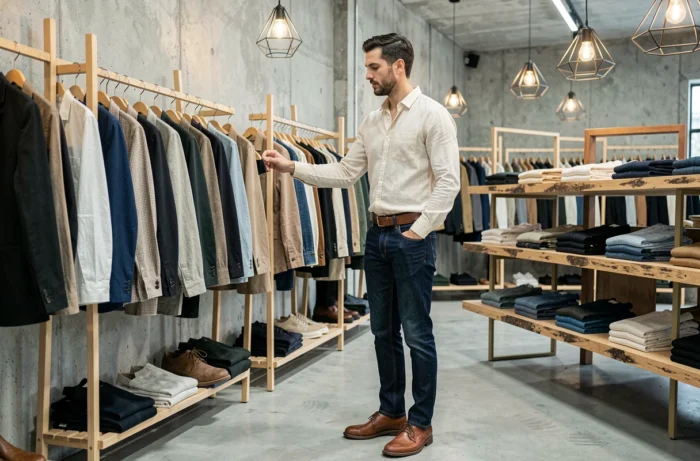
Collecting images on Pinterest provides an aesthetic direction, but rarely results in a functional wardrobe. A more effective approach is to list your actual constraints: professional dress code, local climate, acceptable washing frequency, budget per item. These parameters eliminate entire categories of clothing and narrow down choices to manageable options.
A concrete example: if your daily life alternates between the office and public transport, a technical fabric jacket with a tailored fit better meets your needs than a classic trench coat that wrinkles. Personal style is built on practical trade-offs, not on mood boards.
The role of accessories in differentiation
Two people wearing the same straight trousers and the same plain sweater will produce radically different looks depending on their accessories. A braided belt, a vintage watch, or a structured bag can steer the interpretation of an outfit towards classic, casual, or contemporary.
- High-impact visual accessories (oversized earrings, tied scarf, hat) allow you to test a maximalist register without committing to the entire look.
- Discreet accessories in noble materials (textured leather, brushed metal, linen) anchor the outfit in a quiet luxury register with apparent ease.
- Alternating between the two categories from week to week adds depth to a reduced wardrobe and avoids the feeling of always wearing the same thing.
Generational differences in the relationship with fashion clothing
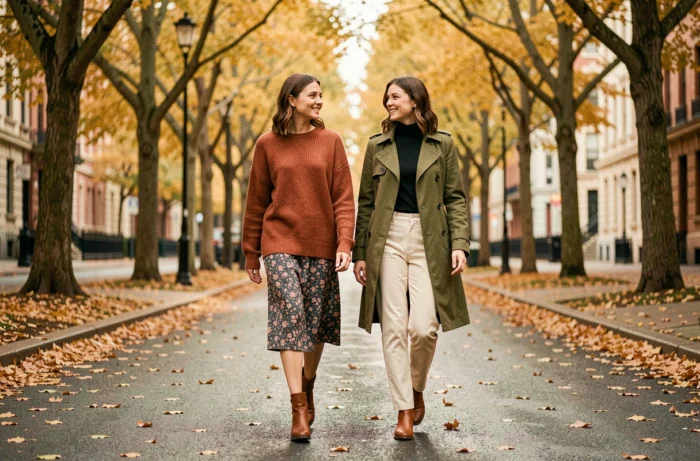
Field reports diverge on this point, but several signals converge: part of Gen Z is turning away from quiet luxury towards expressive maximalism. While millennials have largely embraced the capsule wardrobe and neutral tones, younger consumers are claiming pieces with strong visual identities, even if it means wearing an item for a shorter time.
This generational divergence complicates the notion of a “single trend.” What may be considered a timeless basic by someone in their thirties can seem bland to a twenty-year-old audience. However, both groups share a growing demand for traceability of materials and manufacturing conditions, which redefines the notion of quality beyond mere tactile sensation.
For brands, this means that a single catalog must offer pieces that are readable in both registers. For consumers, this confirms that a unique style does not depend on age but on an assumed personal positioning.
Colors and prints: making choices without mistakes
The choice of colors remains the most direct lever for asserting a look. Neutral palettes (beige, gray, navy, off-white) form a base that most body types and skin tones can wear without risk. Adding just one piece in a strong color (a red sweater, an emerald skirt) is enough to break the monotony without throwing the whole outfit off balance.
Prints require more caution. A large-scale floral print and a fine geometric print are not worn in the same way. The most reliable operational rule: limit the print to one piece per outfit and pair it with solids. Layering two prints requires mastery of proportions and color harmonies that even professional stylists calculate carefully.
- Vertical stripes elongate the silhouette and work on almost all body types in pants or dresses.
- Small polka dot patterns remain readable from a distance and maintain a structured appearance, unlike large dots that draw attention to a specific area.
- Windowpane checks add character to a blazer or trousers without visually overwhelming them.
The current trend values the mixing of textures rather than the accumulation of patterns. A pair of solid corduroy pants paired with a cable-knit sweater creates a tactile contrast that enriches the look as much as a print, with less risk of misstep.
Adopting a distinctive clothing style relies on a series of coherent micro-decisions: the chosen aesthetic register, daily constraints, color dosage, and the place given to accessories. Trends provide vocabulary, not grammar. The grammar is the repetition of choices that reflect who you are.