The sports trends in 2024 are reflected through concrete data: growth in certain disciplines, decline in others, and the emergence of new constraints related to climate or injury prevention. What indicators help distinguish a passing fad from a fundamental shift in sports practice?
Sports Practice and Climate Adaptation: What the PNACC Sport 2024-2030 Changes
The French government published at the end of 2024 a National Plan for the Adaptation of Sports Practices to Climate Change (PNACC Sport 2024-2030). This document structures for the first time the official recommendations aimed at federations, clubs, and individual practitioners.
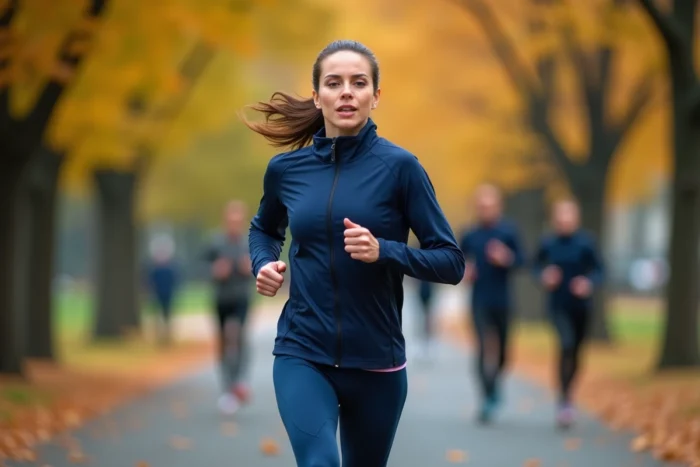
The main axes concern the rescheduling of training hours to avoid heat peaks, the development of sports in cooled environments (water activities, shaded areas), and the revision of competition calendars to limit exposure to heat waves. For running or cycling enthusiasts, this implies a concrete change: summer outings are shifting to morning or evening slots, and race organizers are adapting their courses.
The plan also includes recommendations on the choice of textiles and hydration. Fans who follow sports news on https://www.mordudesport.fr/ regularly find these topics related to athlete health in extreme conditions.
This regulatory framework distinguishes 2024 from previous years: sports practice now officially incorporates an environmental dimension, with recommendations that go beyond simple common sense advice.
Sports Trends 2024: Growth and Decline by Discipline
The 2024-2025 activity report of UFOLEP, the leading affinity multisport federation in France, allows for mapping the real movements within amateur practices. Two dynamics clearly emerge.
| Dynamic | Disciplines Concerned | Main Audience |
|---|---|---|
| Growth | Nature sports, gentle activities, sports leisure | Women, practitioners over 40 |
| Decline | Traditional competitive segments | Historical licensees |
The feminization of amateur sports practices is the standout fact. UFOLEP reports a notable increase in female registrations, driven by accessible disciplines: Nordic walking, sports yoga, nature sports. Meanwhile, more traditional and competitive segments are losing licensees.
This recomposition is not an isolated phenomenon. It is part of a broader trend where the search for well-being and health takes precedence over pure performance. The profile of the practitioner is evolving: less competition-oriented, more concerned with prevention and consistency.
Injury Prevention and Training Data: The Analysis That Changes Practice
The analysis of data applied to sports training has reached a new level. Wearable devices (GPS sensors, advanced heart rate monitors) are no longer used solely to measure performance: they feed into models of injury prevention based on training load.
The principle relies on monitoring external load (distance, accelerations, speed) crossed with internal load (heart rate, perceived effort). When the ratio between acute load and chronic load exceeds a certain threshold, the risk of injury increases. This approach, long reserved for professional sports, is becoming democratized through consumer applications.
Useful Data for the Amateur Athlete
- Monitoring heart rate variability upon waking allows for assessing recovery without expensive equipment
- The increase in training volume should not exceed a certain percentage per week to limit the risk of overload injuries
- Scheduled unloading phases (temporary reduction in volume) remain underutilized among autonomous practitioners
For sports enthusiasts who manage their training independently, regular monitoring of a few simple indicators reduces the risk of injury more than merely accumulating kilometers or sessions.

Running and Endurance Sports in 2024: Beyond Performance
Running remains the most practiced discipline in France among individual sports. In 2024, the dominant trend is no longer the race for personal bests but the integration of running into a holistic health approach.
Short formats (5 km, 10 km) attract new audiences, while ultra-trail continues to grow in its niche. Between the two, the half-marathon retains its popularity as an accessible goal for regular runners.
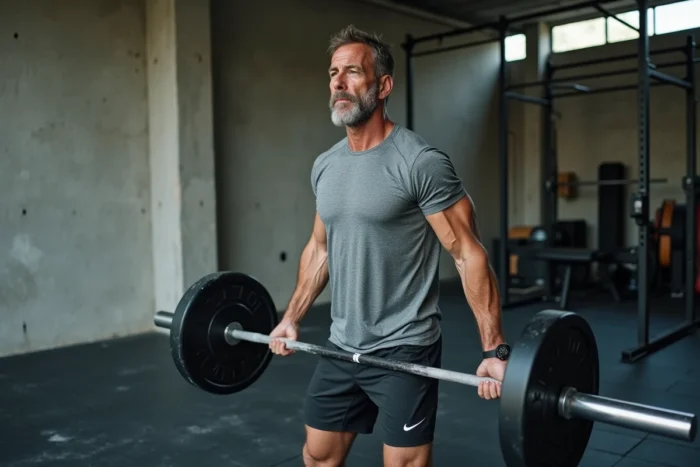
Crosstraining is becoming the norm rather than the exception. Combining running, strength training, and mobility in the same training week reduces monotony and muscle imbalances. Athletes who adopt this approach report better consistency in the long term.
Equipment and Textile Choices
The PNACC Sport 2024-2030 explicitly mentions recommendations on textile materials suitable for high heat. Quick-drying fibers and UV protection clothing are gaining ground in specialized stores. This is no longer a marketing argument but a response to a documented climate constraint.
The 2024 season marks a turning point for sports enthusiasts: equipment choices, training schedules, and volume respond to measurable data, whether physiological or climatic. Sports practice relies on facts rather than intuitions, and this evolution concerns both the casual runner and the federal athlete.