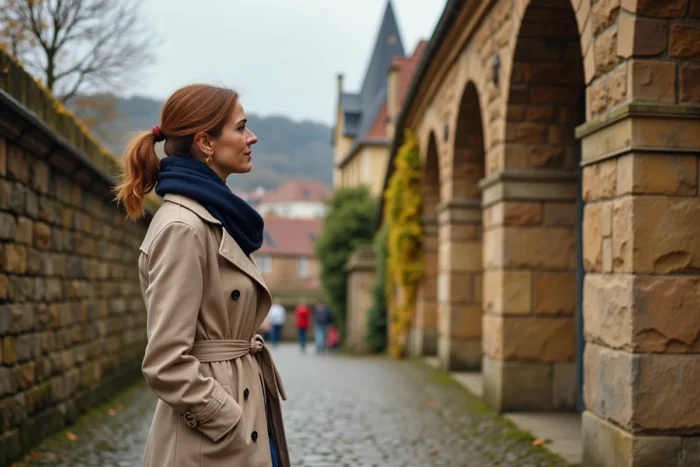
Luxembourg can be explored as a series of micro-regions with distinct geological and heritage characteristics. We recommend structuring a stay around three or four complementary basins rather than radiating from just the capital, which allows for experiencing very different atmospheres in just a few days.
Underground Fortifications of Luxembourg City: Reading a Defensive System, Not a List of Sites
The casemates of Bock, those of Pétrusse, and Fort Thüngen (which houses the Dräi Eechelen Museum) form a coherent fortified network carved from sandstone. Treating them separately, as most guides do, loses the military logic of the whole.
Bock constitutes the original rocky spur, Pétrusse covers the southern flank of the upper city, and Fort Thüngen locks down the Kirchberg plateau to the northeast. Traversing the three in this order restores the defensive stratification that earned Luxembourg the nickname “Gibraltar of the North.”
To prepare an itinerary that integrates these sites into a broader regional circuit, the sheets available on travelguide.lu allow for connecting the capital to rural destinations without wasting time on back-and-forth trips.
The smoothest sequence in the capital then combines the descent towards the Grund district via the Alzette valley, followed by the ascent via the Pfaffenthal Elevator. This vertical route provides a geomorphological reading of the city that city walks in the upper town alone do not allow.
Mullerthal and Beaufort Castle: The Sandstone-Limestone Region That Changes the Game
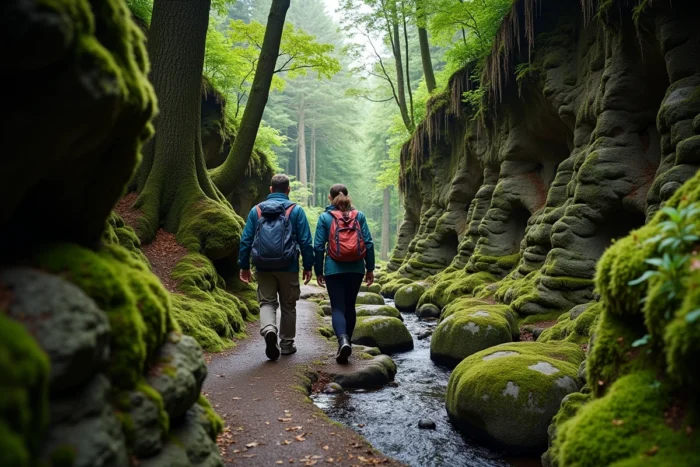
The Mullerthal Trail, particularly its B2 section, traverses Lias sandstone formations with spectacular erosion shapes. The Mullerthal waterfall remains the main attraction, but the geological interest of the trail far exceeds this single spot.
The rock passages, narrow gorges, and overhangs create forested atmospheres reminiscent of those found in certain Saxon valleys, on a completely different scale. The B2 trail requires half a day’s walk to be properly appreciated.
Beaufort Castle, a few kilometers away, completes the visit. Its medieval ruins and the adjacent Renaissance castle document two construction eras on the same site. We observe that this combination of hiking and heritage works particularly well for a full day from Luxembourg City.
Vianden and Bourscheid: Castles of the Eislek and Valleys of the Luxembourg Ardennes
Vianden Castle overlooks the Our valley from a spur that historically controls the northern access to the country. It is the best-restored Romanesque-Gothic fortress in the region. Its massive silhouette justifies the detour, but it is the descent towards the lower town and the banks of the Our that gives the measure of the site.
Bourscheid, less frequented, offers a radically different panorama. The ruins overlook the Sûre in a setting of wooded hills typical of the Eislek. The Luxembourg Ardennes region as a whole deserves at least one night to enjoy the valley trails early in the morning.
- Vianden can be combined with a stop at the chairlift that rises above the castle, offering a bird’s-eye view of the Our valley and the town below.
- Bourscheid is ideally visited in the late afternoon, when the low light illuminates the ruins from the west and empties the site of most visitors.
- The Eislek as a whole functions as a two-day circuit between nature and fortified heritage, with charming accommodations scattered throughout the villages.
Luxembourg Moselle and Minett: The South Beyond Classic Circuits
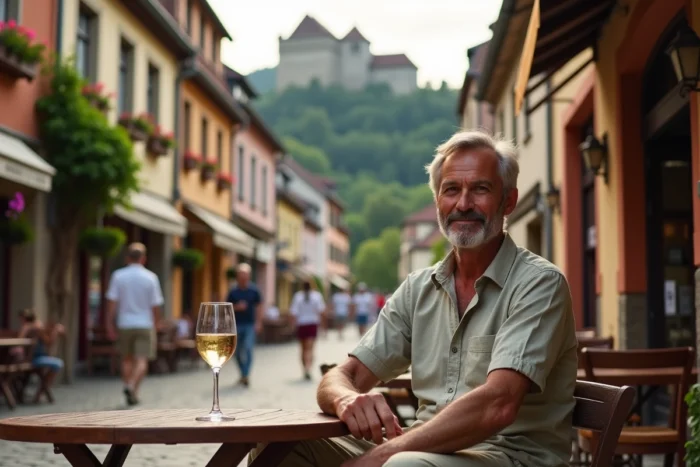
The Moselle valley remains associated with vineyards, but its interest goes beyond tasting. The wine villages between Remich and Grevenmacher feature distinct vernacular architecture influenced by the proximity to Germany.
Minett, the former mining basin in the south, is gaining visibility as a cultural destination. This region, long perceived as industrial, now offers a heritage of conversion: wastelands transformed into cultural spaces, trails exploring the steel industry’s past, and nature reserves established on former operations.
Combining Moselle and Minett along the same southern axis allows for discovering two lesser-known facets of Luxembourg in a single day. It is a solid complement to a stay centered on the capital and the north.
Structuring an Itinerary of Three to Five Days
We recommend breaking down the stay by geographical basin rather than by theme:
- Days 1-2: Luxembourg City and its fortified system, Alzette valley, Kirchberg for the Mudam and the Dräi Eechelen Museum.
- Day 3: Mullerthal (B2 trail and Beaufort Castle), with a possible base in Echternach.
- Day 4: Vianden and Bourscheid in the Eislek, overnight in the Luxembourg Ardennes.
- Day 5: Descent via the Moselle and Minett before returning.
This breakdown covers the main regions of the country without multiplying trips. Free public transport in Luxembourg facilitates travel between these basins, although a vehicle remains more flexible for outlying sites like Bourscheid.
Luxembourg is not well-suited for a star visit from a single point. Each region has a sufficiently marked landscape and heritage identity to justify settling there, even briefly. A stay that alternates valleys, forested plateaus, and vineyards reflects the real diversity of this small country, far beyond just its capital.