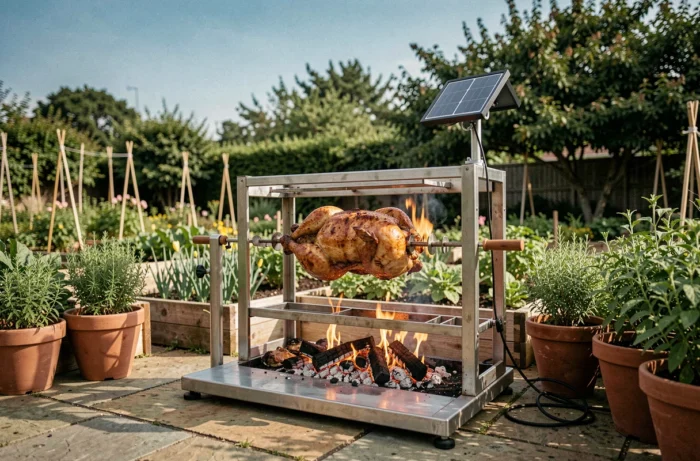
Cooking a rib of beef or grilled vegetables without charcoal, gas, and smoke: the solar rotisserie transforms a simple afternoon in the garden into an eco-friendly barbecue. The principle relies on concentrating sunlight onto a cooking point, eliminating any combustion. Successfully preparing this type of meal, however, requires managing three constraints: the weather, local fire regulations, and the actual limits of solar cooking depending on the foods.
Weather window and fire safety: the real criteria for a successful solar barbecue
Before choosing your marinades, check the sky. A solar rotisserie needs direct and sustained sunlight. A cloudy veil, even light, can unpredictably drop the cooking temperature. In practical terms, plan your solar barbecue during a time of clear sky for at least two hours.
Some municipalities prohibit barbecues during dry periods. Prefectural orders target open flame devices, embers, and sparks. The solar rotisserie produces none. The absence of an open flame makes the solar barbecue compatible with most fire restrictions, including in areas where charcoal is banned during the summer.
However, check the current order in your department before each use, as some regulations prohibit any form of outdoor cooking regardless of technology. To discover models suitable for garden use, you can learn more at Energie O’ Solr, which details possible configurations.
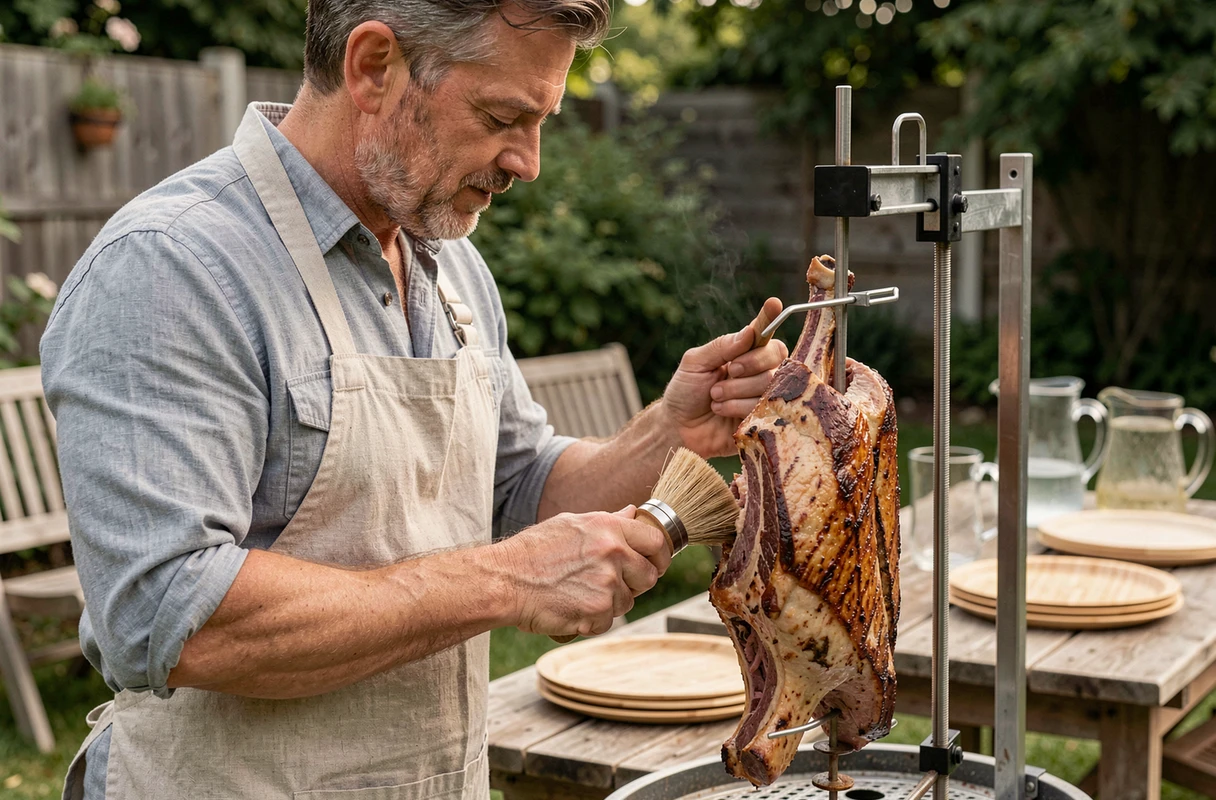
Limits of solar cooking: which foods to use with the rotisserie
Concentrated solar cooking heats strongly, but not like a charcoal grill. The temperature rise is gradual and depends on the orientation of the reflector. This operation radically changes what you can safely cook.
Meats, poultry, and fish: caution without a thermometer
A point rarely addressed in mainstream content: solar cooking without a reliable thermometer is not recommended for meats, poultry, fish, and eggs. The reason is simple. These animal proteins require a precise and maintained internal temperature to eliminate pathogenic bacteria. With a solar rotisserie, a passing cloud for just a few minutes is enough to interrupt the heat rise, creating uncertain temperature zones in the center of the piece.
If you still want to grill meat, equip yourself with a probe thermometer. Insert it into the center of the piece and only serve after verifying that the recommended temperature has been reached and maintained.
Vegetables, grains, and fruits: the ideal playground
Grilled vegetables, corn on the cob, fruit skewers, or grains in a pot are the most suitable foods for solar cooking. Their tolerance to temperature variations is wide. A bell pepper that cooks ten minutes longer remains tasty. A chicken breast that stagnates below the target temperature becomes a health risk.
Favor vegetables and fruits for your first solar barbecues, while you master the behavior of your device according to the time and sunlight.
- Zucchini, eggplants, bell peppers: cut into thick slices, they cook evenly even if sunlight fluctuates slightly.
- Corn on the cob and potatoes in foil: their slow cooking aligns well with the gradual rise of solar heat.
- Pineapple, peaches, bananas: the fruits caramelize gently and forgive temporary drops in temperature.
Installing and orienting a solar rotisserie in your garden
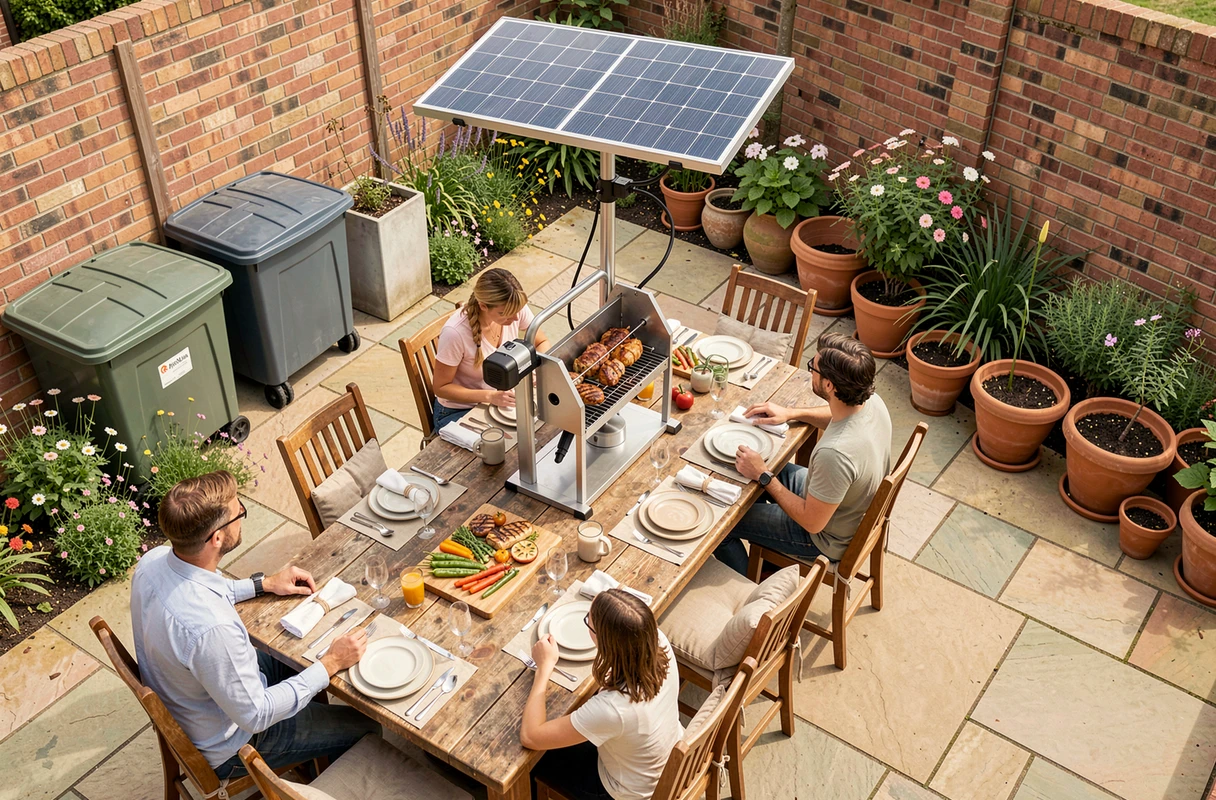
The placement of the parabolic reflector in your outdoor space determines the success of the cooking. It’s not just a matter of sunlight: it’s also about shade, wind, and ground surface.
Choose an open location, without trees or walls casting shade between 11 a.m. and 3 p.m. in summer. Orient the reflector towards the sun and readjust it every 20 to 30 minutes to follow the solar path. This action is the difference between a successful cook and a lukewarm dish.
Wind is the second factor. A regular breeze cools the cooking area and extends preparation times. If your garden is exposed, install a natural windbreak (hedge, screen) on the dominant side, without creating shade on the reflector.
Reflector maintenance: a detail that changes everything
The reflective surface concentrates the rays. If it is tarnished, dusty, or scratched, the cooking power decreases significantly. A gentle wipe before each use is sufficient. Avoid abrasive products that damage the coating. A clean reflector can save several tens of minutes on cooking time.
Solar barbecue and complete meals: going beyond simple grilling
The solar rotisserie evokes the rotisserie, but recent solar devices go further. Some models also function as an oven or parabolic cooker, allowing you to prepare a complete meal without fossil energy.
A successful eco-friendly barbecue is not limited to three sausages on a grill. You can cook a vegetable gratin in a pot, warm up bread, or prepare a fruit dessert while the main dish rotates on the spit.
- Casserole on parabolic reflector: ideal for vegetable stews, curries, or whole grains.
- Rotating spit for whole vegetables: eggplants, butternut squash, or beets roast evenly thanks to the rotation.
- Baking tray for fruits: peaches, figs, or apples caramelize slowly, perfect for dessert.
This versatility transforms the solar barbecue into a true outdoor kitchen. The sun replaces gas and charcoal without sacrificing menu variety.
Organizing an eco-friendly barbecue with a solar rotisserie requires a bit more anticipation than a classic barbecue. The weather dictates the schedule, the thermometer secures animal proteins, and the orientation of the reflector replaces flame adjustment. Once these habits are acquired, the garden becomes a self-sufficient cooking space, silent and without any smoke emissions.