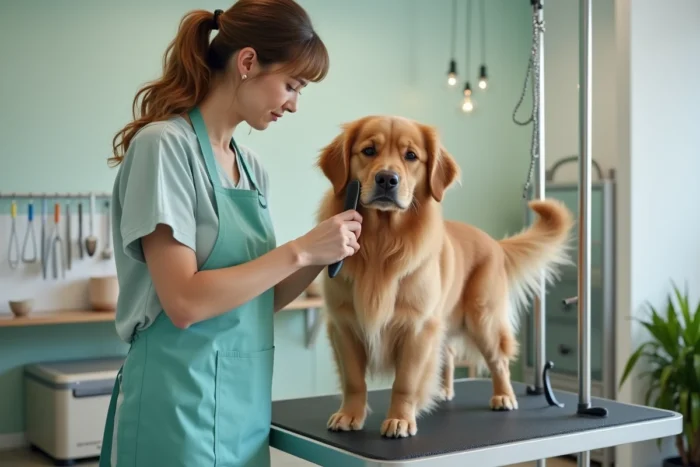
Dog grooming encompasses all hygiene practices applied to the animal’s coat, skin, claws, ears, and teeth. Far from being a simple aesthetic act, it serves as a preventive measure against skin infections, parasites, and joint problems related to overly long claws.
Undercoat, guard hair, and shedding: understanding coat structure
Before choosing a brush or booking an appointment with a groomer, it’s important to distinguish between the two layers that make up the coat of most breeds. The guard hair (or outer coat) protects against water and UV rays. The undercoat, finer and denser, provides thermal insulation.
Double-coated breeds, such as the Australian Shepherd or the Husky, produce a heavy seasonal shed in spring and autumn. Frequent brushing during these periods helps remove dead undercoat and limits the formation of mats that trap moisture against the skin, promoting dermatitis and hot spots.
In contrast, breeds like the Poodle or Bichon have continuously growing hair, with no significant shedding. Their coat requires regular trims but less intensive brushing outside of dirty periods. Adjusting the grooming frequency to the type of hair, and not just the breed, remains the foundation of effective maintenance.
Prices and practical advice vary by species; comparative charts including cat grooming prices on Animal News can help position the canine budget relative to that of other pets.
Brushing, bathing, and targeted care: technical gestures that change the outcome
Brushing according to hair texture
The choice of tool determines the effectiveness of brushing. A Furminator or an undercoat brush is suitable for double coats. A brush with spaced metal pins detangles long, silky hair (like Yorkshire). For short hair (Boxer, Braque), a rubber grooming glove is sufficient to remove dead hair without irritating the skin.
Always brush in the direction of the hair, starting from the tips towards the roots for tangled areas. Working section by section avoids pulling on the skin and reduces the animal’s stress.
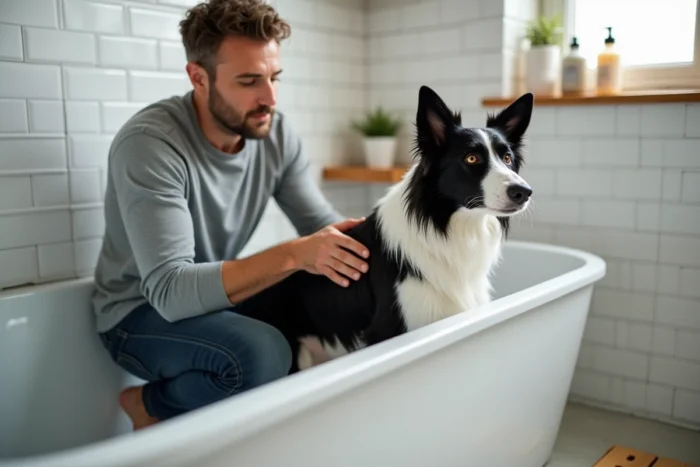
The bath: frequency and choice of shampoo
Bathing too frequently destroys the protective lipid film on the dog’s skin. For most breeds, a bath every two to three months is sufficient, except in cases of significant dirt. The shampoo should be formulated for canine pH, which is more alkaline than that of humans.
- Sensitive or allergy-prone skin: hypoallergenic shampoo without fragrance or dye.
- Dry and brittle hair: moisturizing formula based on colloidal oatmeal or coconut oil.
- Long hair prone to mats: detangling shampoo followed by a conditioner to facilitate post-bath brushing.
Rinsing must be thorough. Any residue of shampoo causes itching and dandruff.
Claws, ears, and teeth
Nail trimming is done with a guillotine or scissor-type nail clipper, avoiding the quick (the vascularized part visible on light-colored claws). For dark claws, trim in small millimeters until a grayish point is seen in the center of the section.
Droopy ears retain moisture and promote ear infections. A bi-monthly cleaning with a veterinary ear solution, applied and then massaged at the base of the ear, reduces this risk. Teeth, often neglected, benefit from weekly brushing with canine enzymatic toothpaste.
At-home grooming or salon: concrete selection criteria
At-home grooming is gaining legitimacy as a distinct service format. Mobile groomers equipped with specially designed vehicles come to the client’s location, reducing transport-related stress for anxious or elderly dogs.
However, this format has limitations. The workspace is restricted, the equipment is less varied, and large dogs (over forty kilos) pose real logistical challenges. The salon offers a controlled environment with a hydraulic grooming table, professional dryer, and suitable bathtub.
- At home: suitable for dogs stressed by transport, puppies in the socialization phase, and elderly animals with reduced mobility.
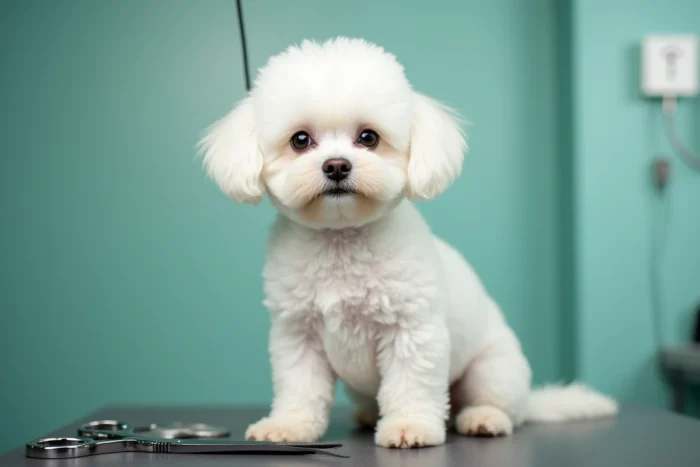
- Salon: preferable for technical cuts (trimming, terrier plucking), breeds requiring complex maintenance (Bichon Frise, Royal Poodle), or complete shavings.
- Autonomy: achievable for brushing, bathing, and routine maintenance, provided one has the right tools and knows the basic techniques.
Dog grooming prices: what affects the bill
The price of a grooming session depends on several cumulative variables. The size of the dog is the primary factor: a Maltese and a Newfoundland do not require the same amount of time or product.
The type of service influences both the price and the size of the animal. A simple bath with drying costs significantly less than a full session including clipping, scissor cuts, plucking, and paw care. The condition of the coat also plays a role: a dog covered in mats will require detangling time that will be charged extra.
Geographical location creates significant disparities. Salons in city centers or large urban areas charge higher rates than those in rural areas due to rent costs and local living standards.
Animal welfare and grooming: an evolving framework
Grooming is part of a broader debate on animal welfare. Industry players like Francodex (Zolux Group) have announced that they will no longer promote animals with hypertypes that may harm their health in their communications. This stance reflects an evolution in the industry: grooming is no longer aimed at conforming the animal to an aesthetic standard at the expense of its comfort.
Furthermore, European regulations are strengthening the protection of dogs and cats, with increased requirements for traceability and identification. Professional groomers are increasingly encouraged to verify that the animals they care for are properly identified, contributing to a more coherent care chain.
Regular grooming also remains a privileged observation moment. A lump under the skin, a red area, a change in coat texture: these signals detected during brushing allow for early veterinary consultation, before the problem worsens. This is probably the most underestimated reason for maintaining a regular care routine.